Severi from Mad.Bike gathered all the footage from our trip and crafted a fantastic video diary of our ride.
The video captures the ever-changing scenery, the shifting landscapes and the unique atmosphere of the ride, made special by an incredible team.
The video serves as a shared memory of the trip for us as riders. For you, if it feels long in one sitting, you can watch it in smaller doses and it still offers a vivid sense of what an adventure motorcycle journey through Northern Vietnam is like.
Hit play and let it spark your appetite for an adventure ride in Northern Vietnam.
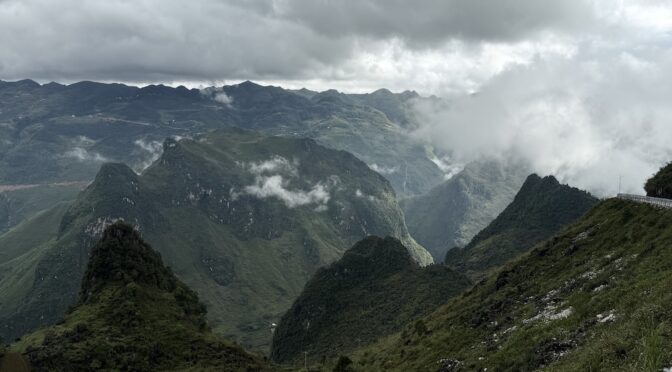
The very north of Vietnam – north of Hanoi all the way to the Chinese border – is one of the few parts of the country I had not yet visited. I’ve ridden the classic Hanoi–Ho Chi Minh City route, zigzagging through the country, and crossed into Vietnam from Laos at the Lao Bao land crossing, heading for Hue, Hoi An, and other well-known destinations. I’ve also done the more touristy highlights, such as Ha Long Bay and the Mekong Delta. However, riding the north on a dirt bike has been on my bucket list for a long time. Well, now was the time.
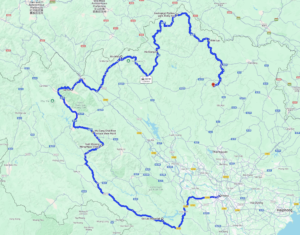
Rough route plan
Planned Overnight Stays
As usual when planning a ride, I explored the options online, and eventually the buck stopped at Vietnam Dirtbike Travel. I contacted Minh Do, who was quick to respond and provided all the details I needed. His professional and straightforward communication reassured me that I had chosen the right rental company. We were offered Kawasaki and Yamaha 250s, which turned out to be more than adequate for the ride.
When planning a tour like this, there’s always the choice between simply renting bikes and heading out on your own, or hiring a guide and even a support van to lead the way. Our team is usually inclined to go fully DIY, as we did recently in the Philippines. However, considering the regions we were heading into and how remote parts of the area are, we decided to have a guide with us. With the benefit of hindsight, having Minh Do as our guide, was the right choice.
The support van, driven by Duc, proved equally useful. It saved us a large part of a day of riding in heavy rain when one bike refused to continue, carried our own beers, and even doubled as a taxi when needed. All in all, it was great value for the convenience and peace of mind it provided.
Hanoi
It was a long, sleepless night, landing at Suvarnabhumi at 5 a.m. I had planned to acclimatise to the time difference in Bangkok, one of my absolute favourite cities. However, arriving so early felt a bit too early for a hotel check-in, so I decided to continue straight on to Hanoi and arrive at a more civilised hour, saving a full day of travel in the process.
Sometimes I wonder why air travel seems deliberately designed to be so laborious. At Helsinki Airport, there were massive queues at security, with only five out of seventeen lanes open. The airport effectively showed its middle finger to travellers. This could not dampen my mood or excitement, and in contrast, Suvarnabhumi was smooth and efficient, including the transfer to Don Mueang and passing through customs.
Miraculously, my first night in Hanoi turned out to be simply brilliant: a solid 8.5 hours of sleep, followed by a hearty breakfast at the rooftop restaurant of the Rex Hanoi Hotel. The hotel is a very good mid-range option, perfectly located in the heart of the Old Quarter. The staff were exceptionally helpful, making the stay genuinely pleasant. Richard, in particular, went well beyond the call of duty, assisting me with countless arrangements related both to the trip itself and my onward travel afterwards.
We are now a group of five plus one biker on this trip, but as the others had not yet arrived, I took the opportunity to check out the bike rental and do some important scouting—namely, identifying suitable bars to take the guys to once they arrived. I even stumbled upon a wine bar, which would have been almost unthinkable in Hanoi just a few years ago.
oplus_11534368
The weather is very hot and humid, forcing me to take showers throughout the day just to stay operational. The city is relentlessly busy, and it only gets more intense towards the evening. I found Grab motorbike taxis to be the best way to get around—by far the fastest and also the cheapest option.
Train street
Parking attendants cover bike seats with towels to keep them cooler
The day’s sightseeing included a visit to Train Street, which is genuinely impressive when a train barrels through. I also paid another visit to the Hanoi Hilton.
After buying a new pair of shoes, the day’s tourist duties were officially completed—well in time before my riding buddies started arriving. And most importantly, to guide them into the busy nightlife of the Old Quarter, with its endless streets, bars, and general chaos. Two of our group were still stuck in Shanghai and were expected to arrive sometime during the night.
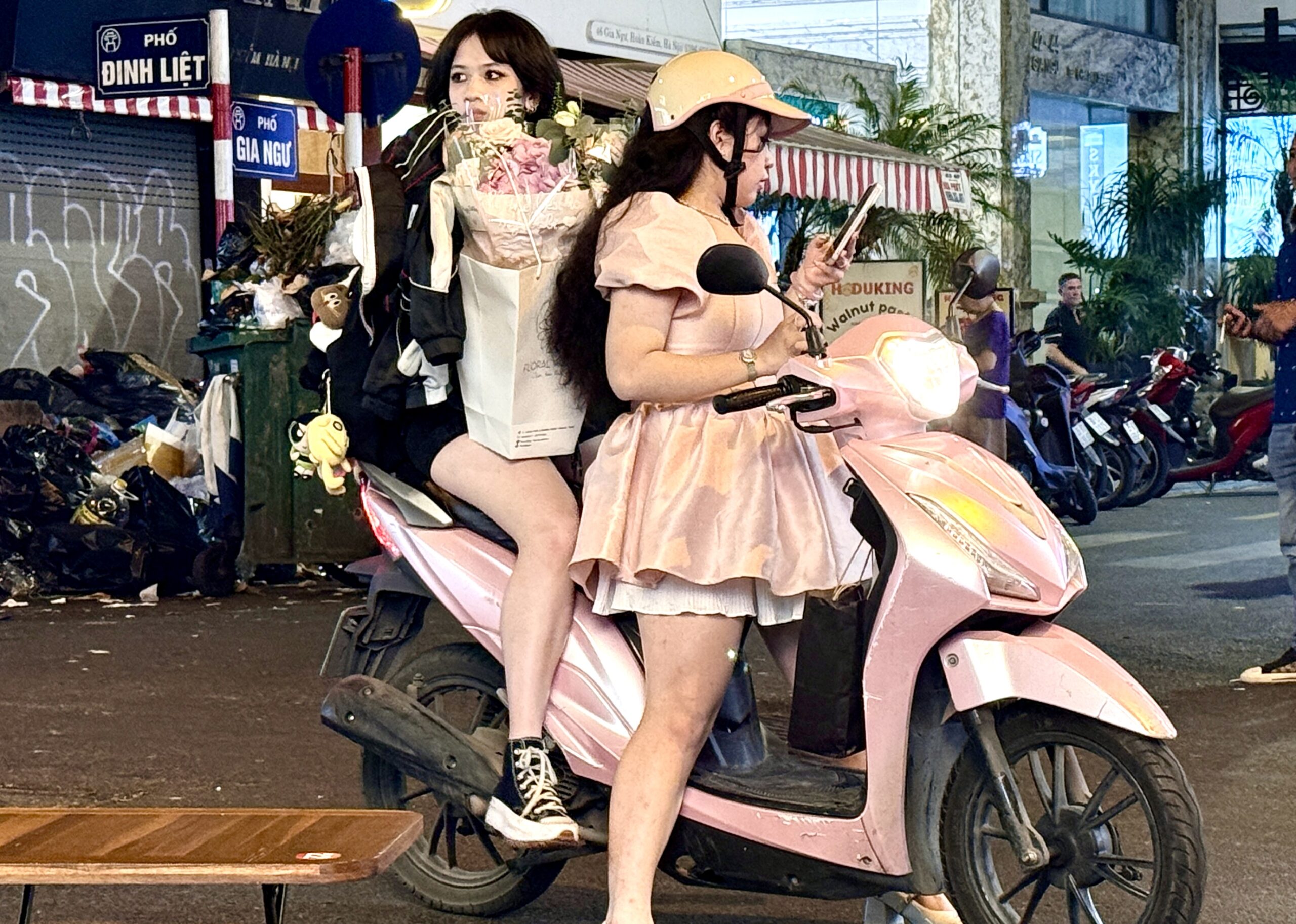
Scooter girls in Hanoi – Style is important!
Then the rain started…
On the bikes
The weather in Asia had been unusually wet far longer into the year than normal. By this time, the rainy season would typically be almost over, but several typhoons had recently passed through the north.
Screenshot
Another typhoon was approaching, and the forecast looked relentlessly wet. Writing this now, after the tour, we were actually lucky enough to hit a small window between the typhoons. Although the weather was challenging at times, it was still far better than what came before—or what followed immediately after our ride. Continue reading Vietnam – The Very North→
These photographs were taken in Vietnam during November 2022. Locations cover the length of the country. Hanoi – Ha Long Bay / Cat Ba Island – Ninh Binh – Hoi An – Ho Chi Minh City.
Hanoi – Ha Long Bay, Cat Ba – Tam Cuc – Cua Lo (Vinh) – Phong Nha-Ke Bang – Hue – Da Nang – An Bang Beach – Hoi An (Typhoon Damrey!!) – Qui Nhon – Nha Trang – Da Lat – Cat Tien – Vung Tau – HCMC
Inspired by Top Gear – OK, Hai Van Pas is just north of Da Nang in the mid part of Vietnam and easy to include in your ride. Right, now that that is settled, we can look at what else to plan for.
Selfie at Hai Van Pas
There are a number of blogs, guides and different articles on riding a motorcycle in Vietnam. I am sure you have seen many and I also did read several before my trip. As a result, I was completely baffled about what to believe.Some advice seemed sound, while some just bragging and would be simply irresponsible. The commentsbelow are based on my own experience and I hope you find them useful.
First, you need a Bike. THE Q: Buy or Rent
This one decision will set the tone for the rest of your ride.
Buy: Used bike from a hostel notice board, etc. – When the seller is gone, he’s gone.
Kawasaki or ???
While it is possible to buy a used motorbike with relative ease, think twice before you buy and do not believe all you hear or read. The cheap bikes 200 – 350 USD are usually Chinese made (even if it is a Honda) and you have no idea what you are actually buying or how the bikes have been stitched together. It does not really help that you most likely are somewhat pressed with time and want to get started with your ride.
Electric bikes are popular
It is possible that you get a decent deal but as you browse some of the accounts, you can read between the lines that there has usually been some issues with the bike.
Again, there are mechanics around but how long do you want to spend at the garage and how far are you willing to push the bike (with your luggage) if it happens to stall in a wrong place. I certainly have never had a problem with my bike in the RIGHT place! Plus every visit to the garage adds costs. Some blogs even mention that you should be prepared for repairs costing about the same as you paid for the bike. If you do not speak Vietnamese – good luck negotiating!
When riding through the length of Vietnam, you get all kinds of weather. From extreme heat to cold and wet conditions. I rode through a monsoon rain and flooded roads. Chinese bike’s electronics might not have survived the ride.
These crappy bikes can be fun outside the bar after a few beers when there are loads of bar-goers trying to kick-start it for you. But the laugh may be short lived if the bike stalls in the rain in the middle of nowhere. On the positive side, you will have a good story to tell.
Buyer beware!
Rent: Even when it reads Honda, it can be made in China.
In order to avoid mechanical issues with the bike as far as possible, go for a Japanese made bike from a reputable source. Check the websites and contact the rental company to learn about the company. They usually provide a wealth of advise on touring in Vietnam. You can also request more information using email to see how they respond.
The rental process is slightly different in Vietnam. Technically you buy the bike and you get the documents as well – note the yellow card! You make a contract with the company to look after the bike and to return it when agreed. A refundable deposit is left with the rental company.
Managed to destroy my rear tire! Fixed at the official dealer service.
There are some further requirements for you, such as oil change at required intervals at the official service garage. These are for your benefit as well and the purpose for using the official service is also to avoid mechanics stealing parts from your Japanese bike and replacing them with Chinese parts! You do not want that to happen!
Fixing a flat tire on the road
I took my Honda Winner from Tigit Motorbikes and can recommend Tigit. Unfortunately they do not pay me for the endorsement, nor have I stupidly even asked!
My bike was relatively new and was in overall good nick. Service at the Hanoi shop was good and we agreed that I would return the bike in Ho Chi Minh City.
Helmet designed for a ponytail!
I even took a free helmet on loan. If you choose to buy a helmet in Vietnam, you can leave it behind for the next rider when you return the bike.
No point in bringing a Vietnamese helmet home with you. Unless you want a souvenir.
Cost for the rental? – My Honda Winner was 350 USD for 35 days. Cost of oil change after each 1000km is single digits USD. A reliable bike is not a cost issue!
Who you’re gonna call? Ghostbusters won’t help!
Damrey aftermath – Typhoon damage in Nha Trang.
I was riding solo for a large part of my trip. Obviously there are pros and cons in riding solo, but one big con is not having a wingman, someone to look after your back when surprising things happen. If you do not have a wingman, you need some contacts to turn to when you need help or advice.
https://www.accuweather.com/en/weather-news/vietnam-cambodia-on-alert-for-new-tropical-threat-in-the-west-pacific/70003149. I was just below Da Nang.
And surprising things do happen! In my case, Vietnam was hit by the strongest typhoon in sixteen years right on my path. I am sure there was information available but I do not speak Vietnamese. My home country foreign office did send me a text message warning and made me aware about the typhoon but obviously the message lacked all the detail.
Flooded road outside Hoi An
Typhoons, etc happen. Leave your travel plans and your contact number with the proper authorities at home, just in case!
The impact of floods and devastation that followed would have been difficult to understand without my contact at Tigit. Obviously I had no idea what damage was ahead of me and how the country would cope with the aftermath. Jon at Tigit had a large number of bikes out and after being in contact with bikers, he had a very good picture of the situation around the country. Jon was very helpful with his advice and responded my emails very quickly.
Tree in the house – Typhoon damage in Nha Trang
Another good feature about Tigit is that they have offices not only in Hanoi and HCMC, but also in Da Nang, half way up the country.
If sh..t really hits the fan, you can return the bike to any of these offices and they will even help you send your bike on a train if needed.
If you buy your bike from a street corner, you will not have the ”base” to contact.
Where to go – I need a map! Except you don’t!
The internet is full of suggested routes across the country and good descriptions about those routes. It really depends on the time you have available. Bike rentals can give you ideas as well.
Bikes can usually pass even when the roads are otherwise closed for building work
The main roads get you relatively quick to the next place and for example Google maps is good for finding your way. I also had maps.me in use. As roads change and infrastructure develops very quickly in Vietnam, a paper map may not be needed. I certainly did not have one. Even Google and maps.me disagreed at times and a simple trip from Hanoi to Ha Long Bay with a new bridge was a challenge for them both. And 40 km extra ride for me! So speak with the locals if possible and listen carefully.
Practicalities with Motorbiking in Vietnam
Bike parking
Always leave your bike to an attended parking. It costs very little, you get a receipt and eventually you get your bike back! At hotels, they will tell you where to park. They can even take the bike in to the reception for the night, unless there is guarded parking.
You should not use the steering lock on your bike. The bikes will be moved around and should the attendant have a bad day, he may break the lock. At least, he will be pissed off with you.
There are motorbike lanes on main roads leading in and out of cities or towns. Check the rules of the road before you go. The right hand lane is usually for motorbikes and highways are completely off-limits to motorbikes – although Google maps may try to guide you there!
Should you come across a toll booth, there usually is a small entry way on the side for motorbikes and you will not need to pay.
Riding in the traffic – that you will need to experience. Filtering through the traffic is the norm. Perhaps not for the faint hearted but keeping the pace and being very careful, I enjoyed it. Unexpected things will happen and nothing is like in the West. Nothing can be taken for granted and motorcycle is usually the weaker party. You have been warned!
Before you get used to the traffic and even then, travel times may be twice or triple what Google suggests. Therefore before you make any binding reservations, you may want to make sure you actually can travel the planned distance. In my case there were some mud slides which had blocked the road and I had to take a 200+ km unplanned detour!
You need fuel!
Fuel is available from stations throughout the country and they will pump the fuel for you. Either full tank or more often, to exact change for ease of payment.
If you go to some really remote areas, you may want to check that fuel stations exist. Alternatively take a full canister with you so you do not have to buy bottled fuel from the road side. This is just to be sure the quality is good and the fuel is clean.
Finding a hotel
Simple as booking.com or any similar app. There are many hotels available, unless you are in a very remote area. Even the very cheap hotels are usually good and clean. Toilet hygiene is good and bed linen clean. I usually paid between 6 and 14 USD per night, often including a modest breakfast. It is possible to find more expensive hotels as well, but there was really no need. Or even cheaper – Go to a hostel and get a bed in a dorm. Some hotels offer dorms as well.
Coco House Homestay
Try a Homestay. They are often hotel-like, but sometimes only a few rooms and perhaps no reception. If your host does not live there, someone comes in the morning to cook breakfast and to look after you.
Money!
While prices may be quoted in US Dollars, payment usually happens in Vietnamese Dongs. This applies practically everywhere. Not just hotels but shops, restaurants, fuel stations, parking – virtually everywhere.
ATMs are widely available and also hotels and shops change Euros or Dollars at favourable rates. My experience was that the rate available in Vietnam was much better than what I got from any currency exchange outside Vietnam. So bring Euros or Dollars and change in Vietnam!
Food, glorious food!
Seafood being cooked in the street – Qui Nohn
Food is really good in Vietnam and very affordable. Do sample the street food and eat where the locals eat. They will tell you if you try to do something stupid or if the food is more of the Vietnamese taste and perhaps not for tourists. With a few dollars you get a good meal and a couple of beers.
Street food
A leg!
Seafood
Fatso soup
Rice bread with sweet & sour sauce
Arrival Treat
The People
I found the Vietnamese really friendly and both trusting and trustworthy. I felt safe everywhere I went.
Many thanks to all the Vietnamese people who made my ride so memorable! You made me feel a welcome guest in your country.
Linh and Phin, Sand Dune Homestay at An Bang Beach.
Are you still wondering?
Just GO! Vietnam is fantastic! You’ll have the time of your life!
Vietnamese coffee alone is worth the ride! Served with ice cubes and green tea!
… that elusive day we keep putting good things off to…